
DMARC + BIMI: Show Your Brand Logo in Gmail, Yahoo & Apple Mail (2026 Guide)
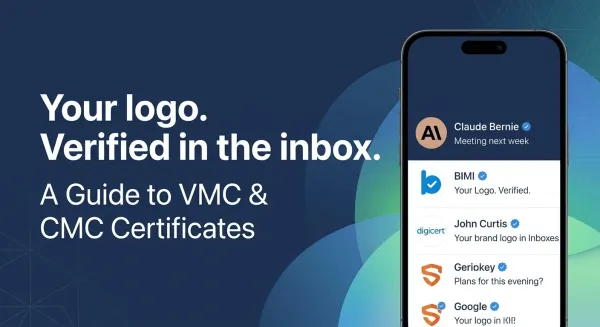
BIMI is the email standard that puts your company logo next to your messages in supported inboxes. In Gmail it shows up as a circular avatar in the sender column.
Gaurav Maniar is the founder of SimpleDMARC and GavBit, specializing in email security, DMARC implementation, and phishing prevention. He develops tools and resources to help organizations protect domains from spoofing and email-based threats.
BIMI is the email standard that puts your company logo next to your messages in supported inboxes. In Gmail it shows up as a circular avatar in the sender column.
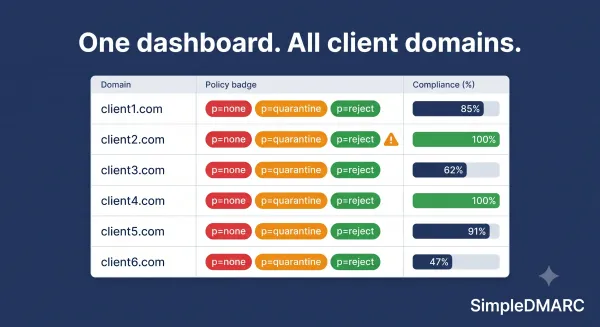
DMARC is becoming a standard line item in MSP security stacks, mostly because clients are getting bounced mail from Gmail and Outlook and asking why. The actual challenge for MSPs isn't the DMARC protocol itself — that part is well-documented.
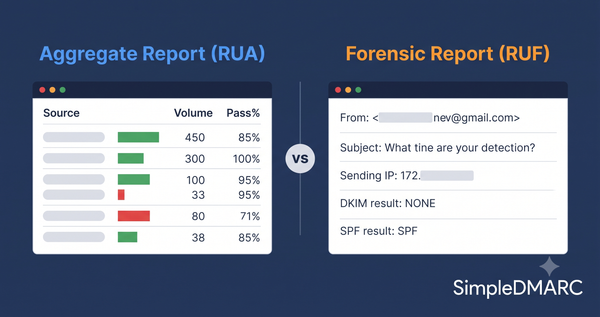
You signed up for DMARC, set up the record, and now your inbox has files arriving from Google, Yahoo, and Microsoft with names like `google.com!yourdomain.com!1747094400!1747180800.xml`.
Short version: your email to Gmail, Yahoo, and Outlook addresses gets rejected. Not delivered to spam, not delayed for retry. Bounced, with a `550` error.
Scammers send emails every day pretending to be from businesses like yours. A customer gets a fake invoice that looks like it came from your company, pays it, and then comes back angry when the real invoice arrives.
If your domain's DMARC policy is still set to `p=none`, you can see who's attacking you — but you can't stop them.
Picture this: your CEO's email address just sent 50,000 phishing emails to your customers. Except it wasn't actually your CEO. Welcome to the world of domain spoofing, where anyone can pretend to be anyone else — unless you've got DMARC, BIMI, and VMC working for you.
A straightforward guide to understanding domain spoofing attacks, why your business domain is a target, and what you can do about it today.
Week 1 of 8 – Understand the Threat Before It Hits You In a world where cyber threats evolve faster than ever, phishing remains the #1 entry point for data breaches and ransomware attacks. If you've ever received a suspicious email asking you to "verify your account"
Introduction Black-friday that’s an excellent shopping event famous for great deals and shopping revival is also the best time for online scammers to swoop in. As the usually shopping shifted to online, the channels through which scammers can work have increased tremendously. This article explores and explains different Black
Phishing
Phishing vs. spear phishing—understand their differences. Explore how each threat operates and get tips on staying secure from cybercriminals targeting your data.
Phishing attack
Discover how a single negative trigger can outweigh five positive experiences in phishing attacks. Learn the psychological tactics used by cybercriminals to exploit human vulnerabilities and how to protect yourself.