DMARC + BIMI: Show Your Brand Logo in Gmail, Yahoo & Apple Mail (2026 Guide)
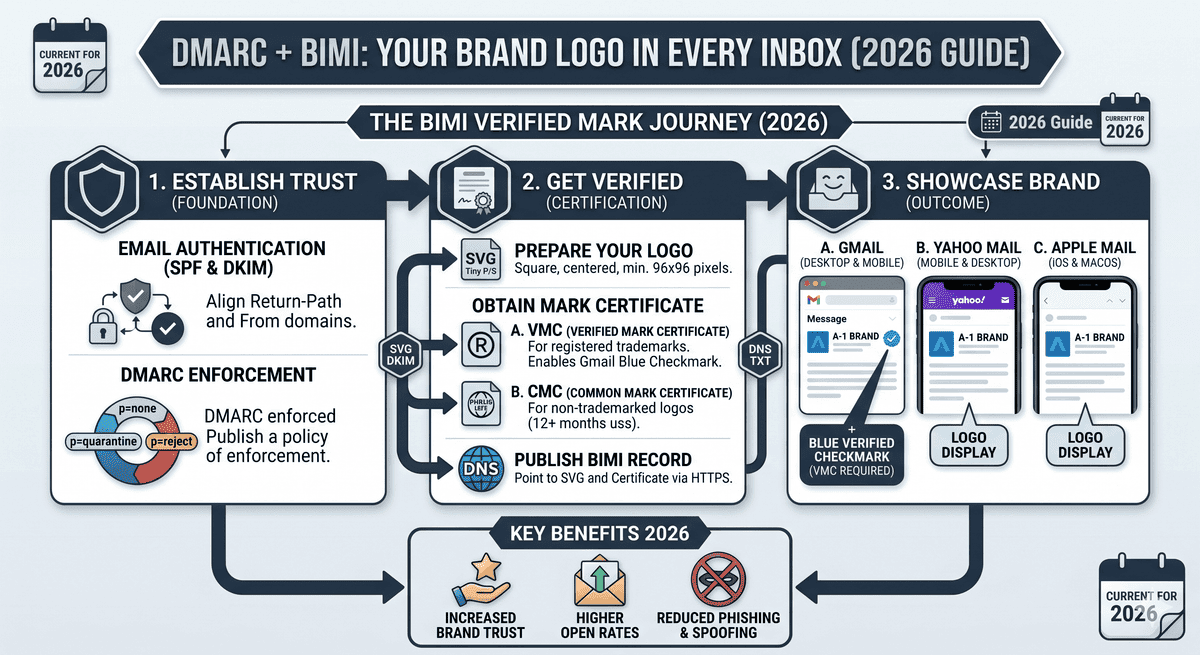
BIMI is the email standard that puts your company logo next to your messages in supported inboxes. In Gmail it shows up as a circular avatar in the sender column.
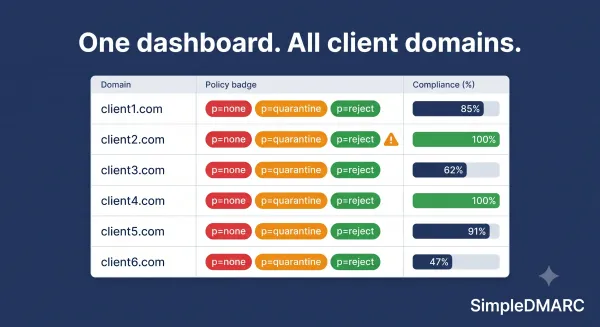
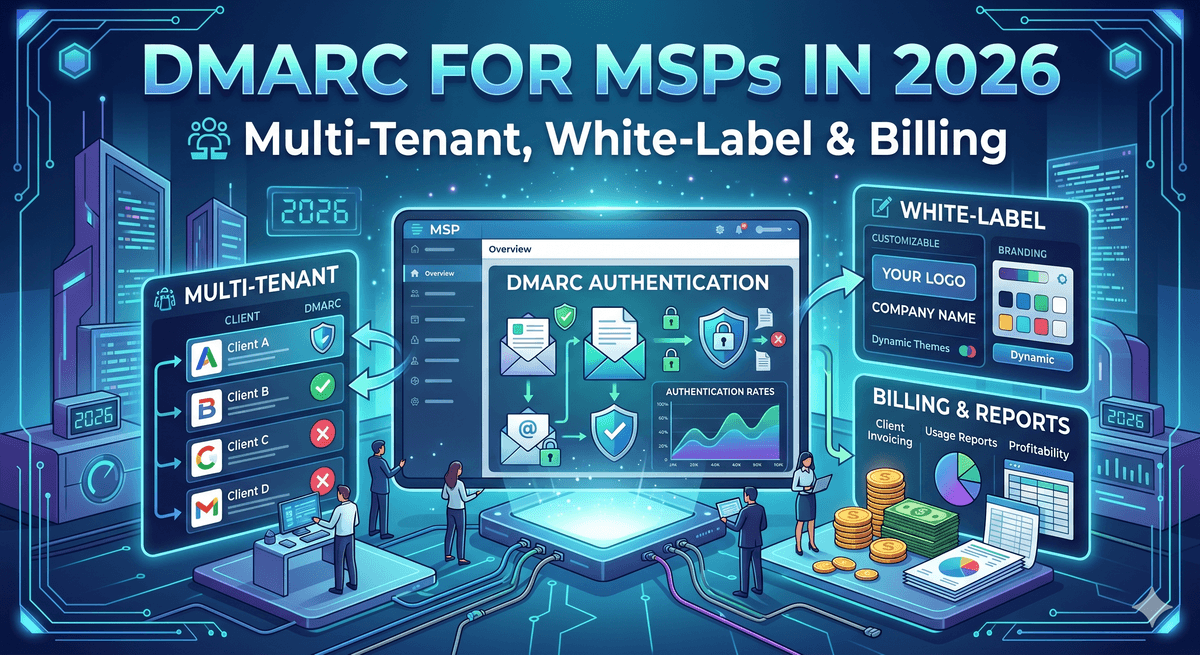
DMARC is becoming a standard line item in MSP security stacks, mostly because clients are getting bounced mail from Gmail and Outlook and asking why. The actual challenge for MSPs isn't the DMARC protocol itself — that part is well-documented.
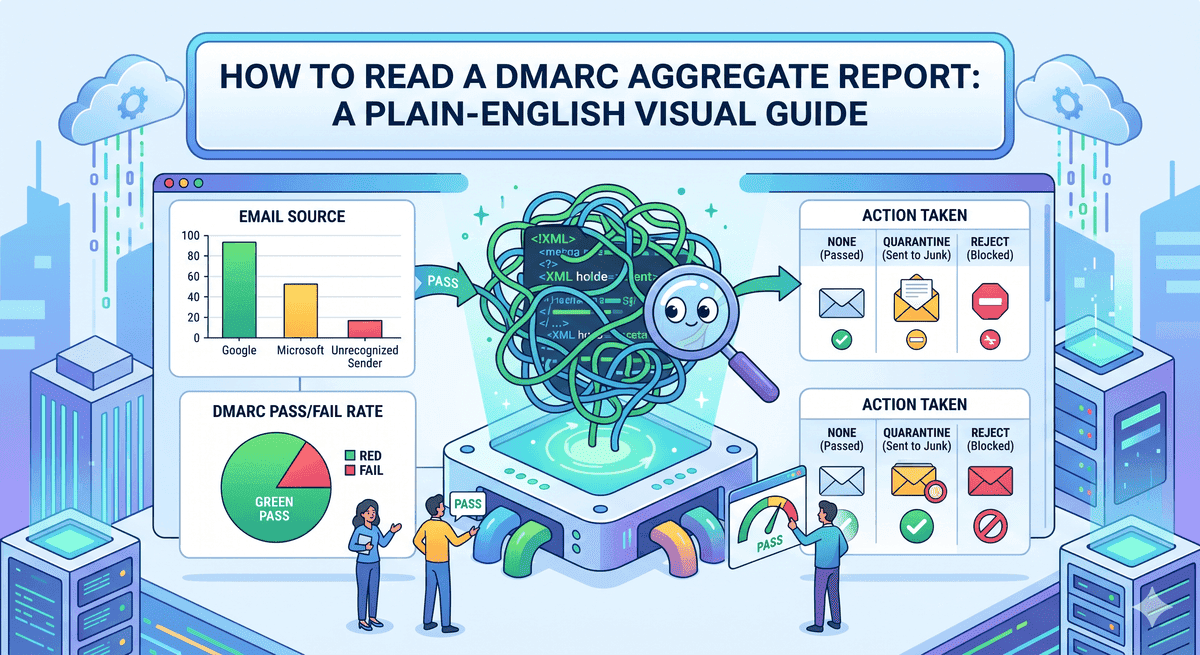
You signed up for DMARC, set up the record, and now your inbox has files arriving from Google, Yahoo, and Microsoft with names like `google.com!yourdomain.com!1747094400!1747180800.xml`.
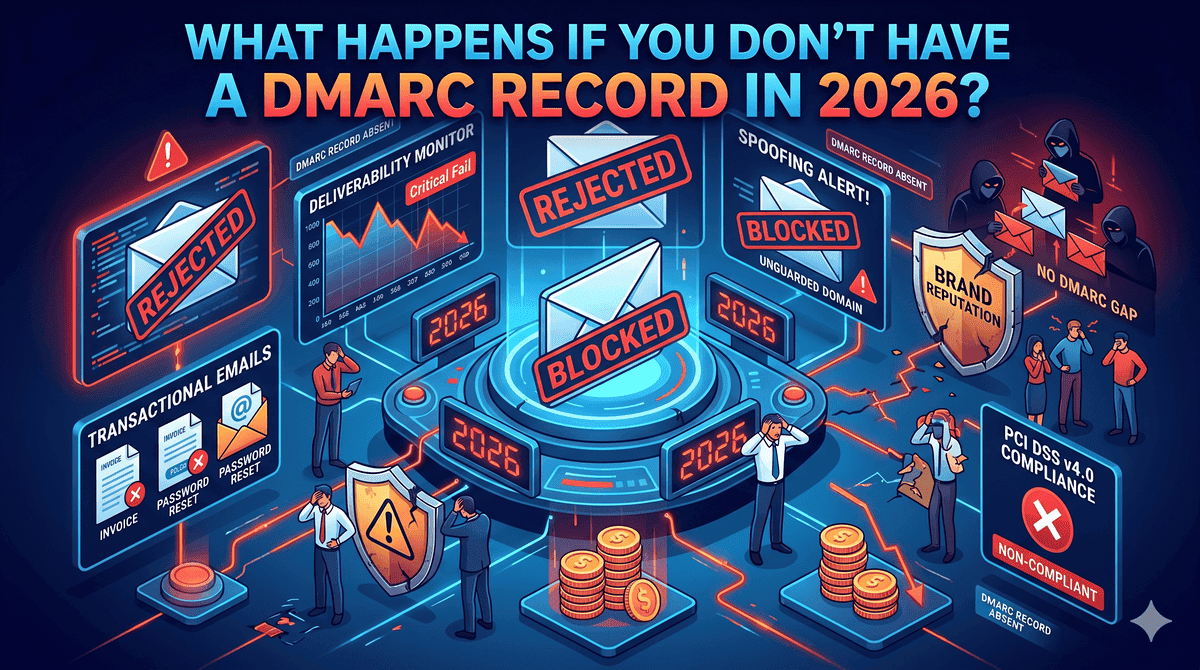
Short version: your email to Gmail, Yahoo, and Outlook addresses gets rejected. Not delivered to spam, not delayed for retry. Bounced, with a `550` error.
Scammers send emails every day pretending to be from businesses like yours. A customer gets a fake invoice that looks like it came from your company, pays it, and then comes back angry when the real invoice arrives.
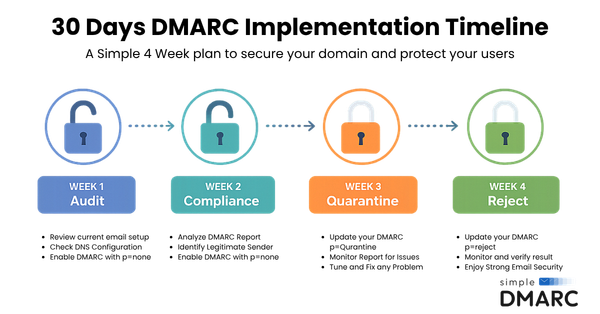
If your domain's DMARC policy is still set to `p=none`, you can see who's attacking you — but you can't stop them.
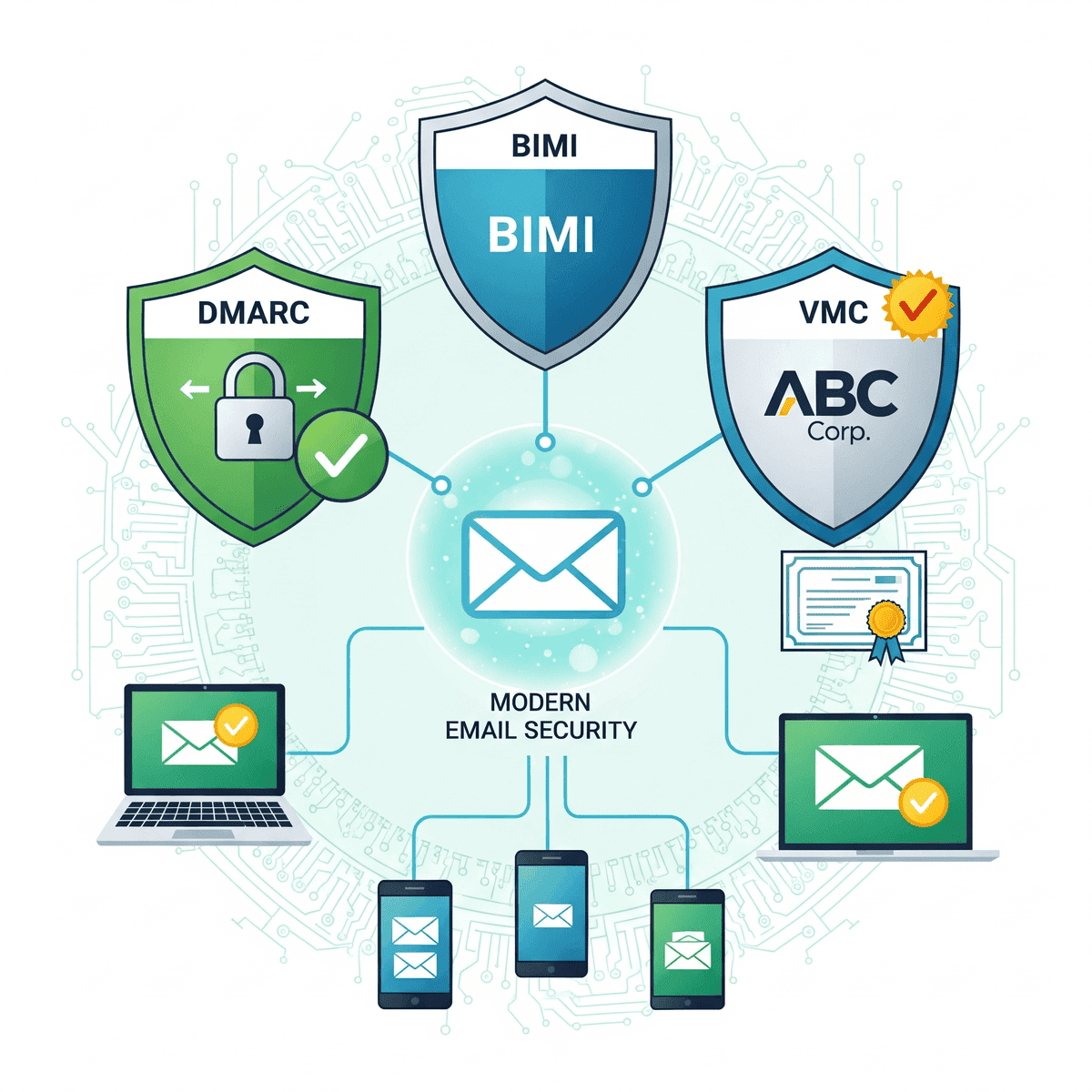
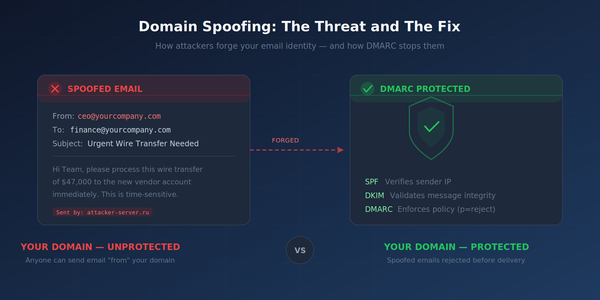
Picture this: your CEO's email address just sent 50,000 phishing emails to your customers. Except it wasn't actually your CEO. Welcome to the world of domain spoofing, where anyone can pretend to be anyone else — unless you've got DMARC, BIMI, and VMC working for you.
A straightforward guide to understanding domain spoofing attacks, why your business domain is a target, and what you can do about it today.
Week 1 of 8 – Understand the Threat Before It Hits You In a world where cyber threats evolve faster than ever, phishing remains the #1 entry point for data breaches and ransomware attacks. If you've ever received a suspicious email asking you to "verify your account"
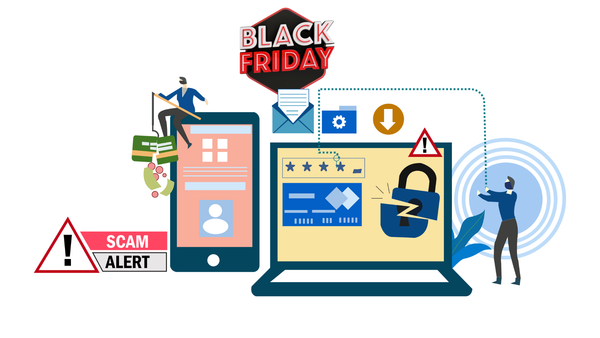
Introduction Black-friday that’s an excellent shopping event famous for great deals and shopping revival is also the best time for online scammers to swoop in. As the usually shopping shifted to online, the channels through which scammers can work have increased tremendously. This article explores and explains different Black
Phishing vs. spear phishing—understand their differences. Explore how each threat operates and get tips on staying secure from cybercriminals targeting your data.
Discover how a single negative trigger can outweigh five positive experiences in phishing attacks. Learn the psychological tactics used by cybercriminals to exploit human vulnerabilities and how to protect yourself.
Introduction The Growing Threat of Phishing Phishing attacks have become a persistent menace in today's digital landscape, with cybercriminals refining their tactics to deceive even the most cautious users. From cleverly disguised emails to sophisticated impersonation schemes, phishing is an annoyance and a significant security threat that can
Phishing awareness
Introduction Phishing scams are fraudulent attempts to obtain sensitive information by masquerading as a trustworthy entity in electronic communications. With cybercriminals becoming increasingly sophisticated, it's crucial to recognize and avoid phishing emails. We will provide five powerful tips to help identify phishing scams and protect yourself from threats.
Discover how to protect your organization from Business Email Compromise (BEC) with recent attack examples, the role of AI and GPT in increasing risks, and how DMARC can prevent BEC. Learn key strategies to safeguard your email security.
Phishing attack
Introduction Phishing scams are deceptive attempts to obtain sensitive information by acting as trustworthy entities in electronic communications. These scams pose considerable risks to individuals and organizations, leading to data breaches, financial losses, and identity theft. As we progress into 2024, the sophistication of phishing attacks continues to evolve, making
Phishing attack
Discover expert strategies to shield your small or medium-sized business (SMB) from phishing attacks. This guide offers actionable insights on enhancing cybersecurity, training employees, and implementing advanced protection measures to secure your digital assets against sophisticated threats.
Phishing Protection
Discover the alarming rise of deepfake and phishing scams targeting corporations. Learn how to shield your business with cutting-edge strategies and SimpleDMARC's robust email authentication. Stay ahead of cyber threats and safeguard your company's future.
Phishing Protection
Discover the shift in phishing from 2023's targeted spear phishing to 2024's AI-driven threats. Learn key strategies to combat these evolving cyber risks in our latest blog.
Stay ahead in email marketing with our comprehensive guide on the latest Gmail and Yahoo requirements. Learn how to effectively implement DMARC and SPF protocols to ensure your emails reach their destination, maintain sender credibility, and adapt to evolving digital communication standards .
Phishing attack
Introduction to Cyber Threats During Festive Times The festival of Diwali is synonymous with lights, celebrations, and, increasingly, digital connectivity. As families and friends connect online to share joy, cyber threats like phishing and ransomware become more prevalent. These malicious activities aim to exploit individuals' high-spirited. Often less cautious
Analyze DMARC
Discover 10 DMARC secrets to shield your business against email spoofing, enhance brand reputation, and ensure secure email communication.
In email authentication, three essential protocols are crucial in ensuring the security and authenticity of email communications: DMARC, SPF, and DKIM. These three acronyms may seem daunting, but understanding their differences is essential for anyone concerned about email security. In this article, we will break down DMARC, SPF, and DKIM,
Best Practices
In today's digital age, remote work has become increasingly popular and necessary. Many employees now have the flexibility to work from the comfort of their homes, coffee shops, or co-working spaces. While remote work offers convenience and flexibility, it also introduces new challenges, particularly when it comes to